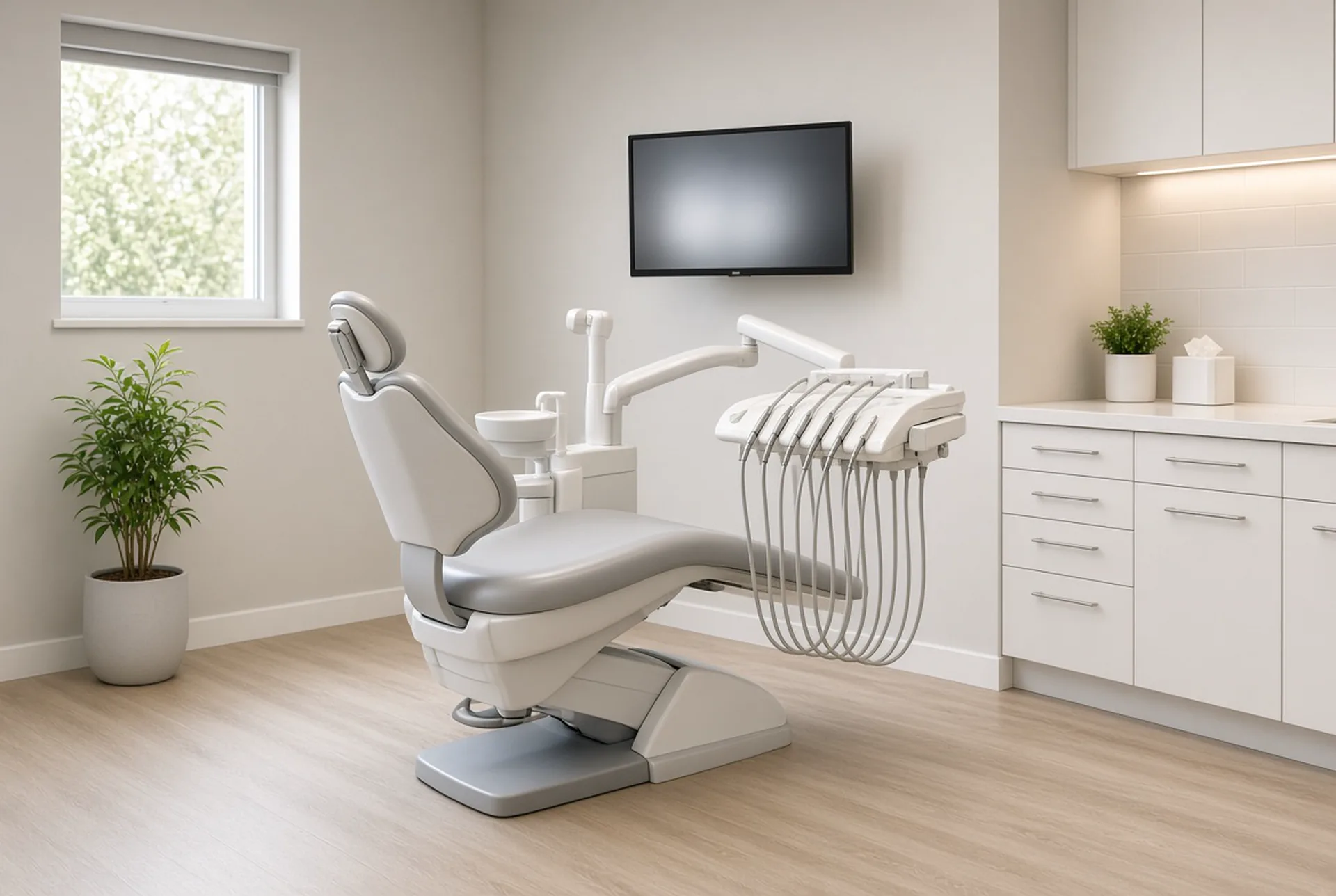
A cavity is a hole where bacteria have eaten into the tooth. Caught early, the fix is a filling: Dr. Seyal numbs the area, cleans out the decay, and fills the space with a tooth-colored material that bonds to the tooth. Left alone, the same cavity becomes a root canal or an extraction.
Tooth-colored composite
Composite resin is shaded to match your enamel and bonded directly to the tooth, so the repair is invisible and less tooth has to be removed than with old silver fillings. It hardens under a blue light in seconds and you can eat on it the same day.
What the visit is like
Numbing, a few minutes for it to take, then ten to thirty minutes of work depending on the size. You will feel pressure and vibration but not pain. The numbness wears off in a couple of hours; be careful not to bite your lip until it does.
Keeping it from coming back
Fillings do not stop new cavities. The bacteria are still there. Dr. Seyal will show you where the decay started and why, whether that is a spot you are missing with the brush, snacking habits, dry mouth from a medication, or something else. Fixing the cause is worth more than the filling.
What you get
- Matched to your tooth color, so nobody sees it
- Less drilling than a silver filling
- Done in one visit, usually under half an hour
- Stops decay before it reaches the nerve
- Sealants available for kids' molars to prevent cavities in the first place
Questions people ask
Fillings: FAQ
Do I need a filling if the tooth does not hurt?
Usually yes. Decay does not hurt until it is deep. A filling now is small and cheap; the same tooth in a year may need a root canal and a crown.
How long does a filling last?
Most composite fillings last seven to ten years or more, longer with good home care. Large fillings wear out sooner, which is when a crown may be the better choice.
Should I replace my old silver fillings?
Not just because they are silver. A sound silver filling can stay for decades. We replace them when they crack, leak, or the tooth around them breaks.