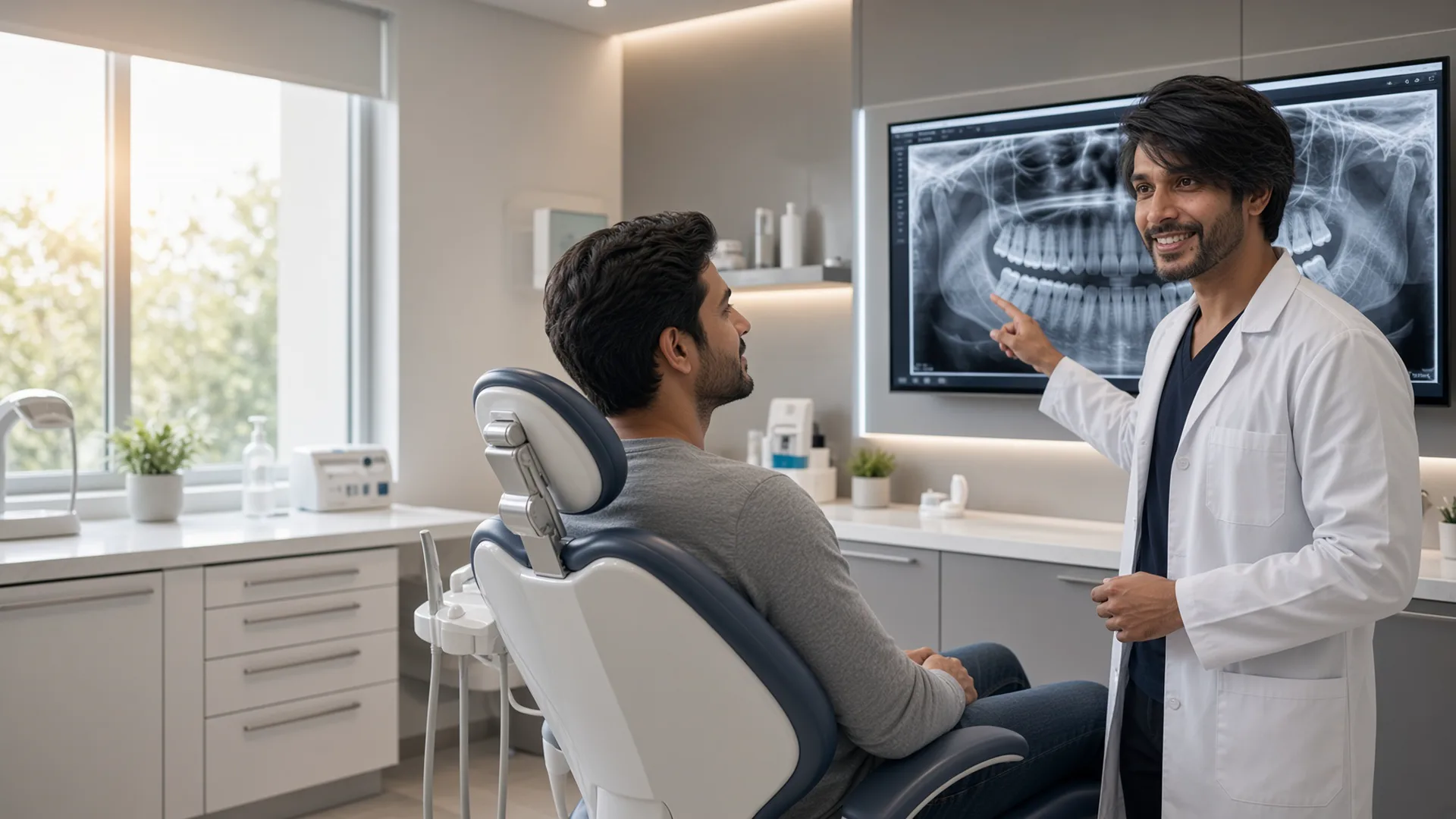
Cavities between teeth, infection at a root tip, and bone loss around the gums are all invisible from the outside. Digital x-rays show them on the screen in seconds, and you look at the same image Dr. Seyal is looking at while he explains it.
Less radiation than old film
Digital sensors need a fraction of the exposure that film did, and there is no chemical developing. A set of bitewings is a very small dose, well below what you pick up on a short flight. You wear a lead apron anyway.
What the images show
Bitewings catch decay between the back teeth and show bone level around them. A panoramic image shows every tooth, the jaw joints, and the sinuses in one picture, which is how we plan extractions, dentures, and implants. A single periapical image shows one tooth root to the tip, for checking an abscess or a cracked root.
How often
Bitewings about once a year for most adults, more often if you get cavities easily. A panoramic image every few years, or when planning treatment. If you have recent x-rays from another office, bring them or have them sent and we will use those instead.
What you get
- Problems found before they hurt or get expensive
- Images on the screen in seconds, explained to you
- Much lower radiation than film
- No chemical developing, no waiting
- Easy to send to a specialist if you ever need one
Questions people ask
Digital X-Rays: FAQ
Are dental x-rays safe?
Yes. Digital dental x-rays are among the lowest-dose medical images there are, and we only take the ones that will change what we do.
Can I get x-rays if I am pregnant?
Routine x-rays usually wait until after the baby comes. If you have pain or an infection, a single targeted image with a lead apron is considered safe. Tell us, and Dr. Seyal will talk it through with you.
Do I have to get x-rays?
You can decline, and we will tell you honestly what we cannot see without them. Most people choose to have them once they understand what they show.